
Footing first
Know where it’s safe to stand before you cast.

A safety-first playbook for the days when the swell shifts, the current pulls, and you still want a plan that holds.
Built with a Pacific Northwest fishing creator who’s spent plenty of mornings figuring it out the hard way on these rocks.
Simple setups. Clear decisions. No hype.
Some days it’s not about skill — it’s about timing, footing, and making the right call before things get sketchy. I put this together for the people who actually fish these rocks — and want to come home safe and still have a real shot at fish.
I keep it simple — because complicated gets you stuck.
I fish what works — not what looks good online.
I stay aware — because the ocean doesn’t care.
Rocks shift. Waves come in sets. Current changes everything about your presentation. Most frustrating trips happen when you’re reacting late — switching gear, guessing weight, and losing the window.
Know where it’s safe to stand before you cast.
Match your rig to the water — not your habit.
When it’s not working, change one thing — on purpose.
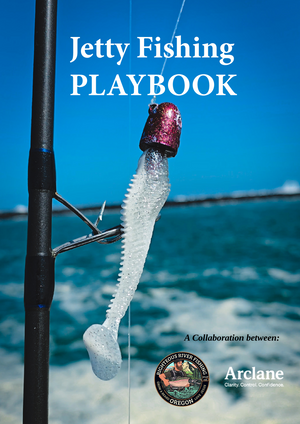
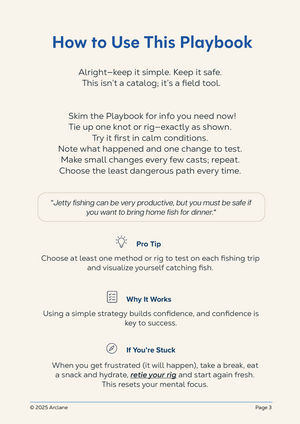
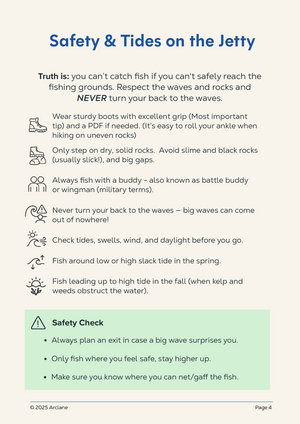
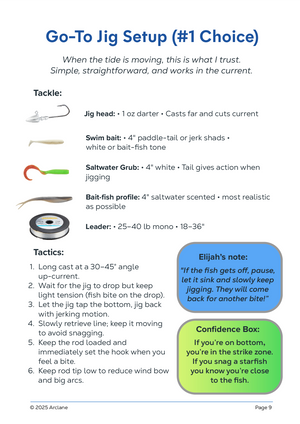
Here are a few pages from the playbook so you can see how it’s laid out and how it’s written.


No fluff. Just the parts you actually reference when you’re out there.
Get the PlaybookThis guide starts where it should: staying upright, staying aware, and knowing your way off the rocks. Because no bite is worth a bad step on slick stone.
Dry rock only. Skip slick spots and gaps that don’t feel solid.
Never turn your back. Sets roll in fast, and timing changes quickly.
Fish with a buddy when you can, and always know how you’re getting off.
When conditions change, you don’t need more gear — you need a clearer next step.
Swell, tide, wind, daylight — before you rig up.
Match weight, leader, and profile to the water.
Stay consistent for a few casts before you change anything.
Make one change — then cast again.
Field-tested approach
When the water’s moving, I reach for the jig. When things slow down, I keep it simple and put bait where fish actually live.
Best when current is moving and fish are reacting fast.
Best when things slow down and fish hold tight to structure.
Not secret tricks. Just doing the basics well.
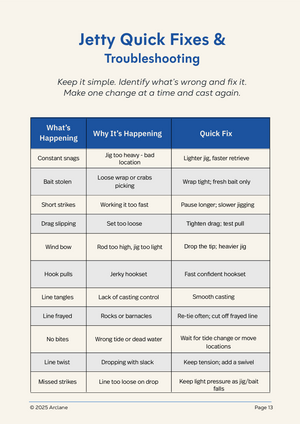
When something goes wrong, you don’t need a new lure — you need the right fix.
Diagnose → adjust → cast again.
| What’s happening | Likely reason | Quick fix |
|---|---|---|
| Constant snags | Jig too heavy or bad position | Go lighter or move |
| No bites | Dead water or wrong tide | Wait it out or relocate |
| Line fraying | Rocks or barnacles | Retie now |
Make one change. Cast again. Repeat.
Quick reference, built for the rocks
A clean, field-ready checklist you can scan fast — and apply immediately on your next jetty session.
Digital PDF • Instant access • Phone-friendly • Printable


One-time purchase • Instant digital access
Printable PDF • Works on phone and tablet • One-time purchase
Quick answers so you know exactly what to expect before you download.
Yes. It starts with safety and simple setups before moving into adjustments.
It’s written with PNW jetties in mind, but the principles apply anywhere with similar rocks, current, and structure.
Yes. The focus is on decision-making and small adjustments, not just how to move a lure.
No. This is a digital PDF you can use on your phone or print.
You’ll receive instant access after checkout through the Shopify download.
Yes. It’s designed to work both printed and on your phone.
Built for real conditions. Meant to be used — not just read.
